Otter’s useful guide to Chillies

Better than shop bought

Fresh chillies from the garden are a real bonus for any cook.
Classed as a fruit, chillies add depth and warmth to multiple recipes.
Whether you prefer mild, medium or really spicy, there’s a chilli variety for you.
And even better, they are pretty easy to grow.


Different types

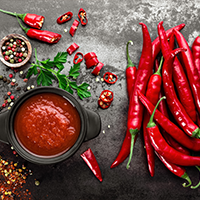
There are many varieties of chillies, ranging in colour, flavour, and, most importantly, spice!
Find the spice level you’re comfortable with and incorporate the deliciously fresh flavours into your next recipe

How to grow chillies

Where to grow

If your greenhouse has open soil or you have a small polytunnel you can plant chillis directly into the ground.
Alternatively grow them in pots, either in the greenhouse or outdoors in the sunniest spot available.
You could try planting directly into the ground, but make sure the soil is well draining, rich, moisture retaining and, ideally, acidic.

Pots

The size of pot you use depends on the variety of chilli you are growing.
In general, your pots should be between 9 and 12cm in width.
Black pots can help retain warmth.
Fill with a good quality compost, keep this quite loose, make a small hole in the centre of the pot, place the plant into the hole and gently firm.
Add a little more compost on top and water well.
Don’t forget to keep the label so you can check the strength of your chilli when you come to harvest time!

Grow Bags

You can grow up to three chilli plants in a standard grow bag.
Shake the grow bag prior to planting to remove lumps, cut where indicated and water well before planting.
Remember grow bags can dry out very quickly in hot weather, so keep an eye on moisture levels.

Greenhouses

Pots or grow bags can be kept in the greenhouse, or you can plant directly into the ground.
In very hot weather you may need to provide shade for your chilli plants – if they get too hot they won’t fruit.

General advice

Watering

Chillies prefer to be watered little and often.
Avoid waterlogging and don’t let the compost dry out completely.
Take care particularly with grow bags and pots.
You can also mist the leaves from time to time.

Pinching Out

Once the plant is around 25 to 30cm tall, take off the top tip of the plant.
This encourages additional side-shoots which will grow more chilli flowers and fruit.
You’ll also have a bushier plant that looks good in your garden.

Feeding

Chilli plants don’t like feed that is high in nitrogen, so choose a high potassium feed, which will encourage fruiting and flowering.
Start feeding every other week when the plants are young and once the flowers appear, feed weekly.

Growing from seed

Chilli seeds are generally sown indoors from February to April.
The earlier you sow them, the longer you’ll be able to enjoy fresh chillies.
Grow on a warm windowsill or ideally a propagator: chilli seeds only germinate in warm conditions.

Things to look out for

Signs of disease, pests and problems

White crystals on the leaves indicate the plant is overwatered.
If left uncontrolled, spider mites will damage chilli plants. Remove them with a spray of water of if there is an infestation, prune off affected parts of the plant.
Aphids are another common problem. Remove these by hand as soon as you see them to keep them under control.
Yellow leaves can indicate poor watering, feeding, pests or disease.
Try to identify the problem, cut off affected leaves and if necessary, change your method of watering/feeding

When to harvest

If you’ve grown them under cover, your chillies should be ready to pick from mid-summer, later if grown outdoors.
Picking chillies before they change colour will encourage more fruit to set.
You can ripen chillies indoors to their final colour.
However, if you like hot chillies, leave them on the plant for longer – you may get a smaller harvest but you’ll get more heat!

Need more advice?

If you’re still unsure or need any advice, our friendly teams will be happy to chat with you and suggest which varieties would be best for you to plant, as well as when and where to plant them.

We hope you enjoy planting your chillies– but more importantly, enjoy eating them!

Related News

Newsletter

Sign up to receive our latest insights & news.